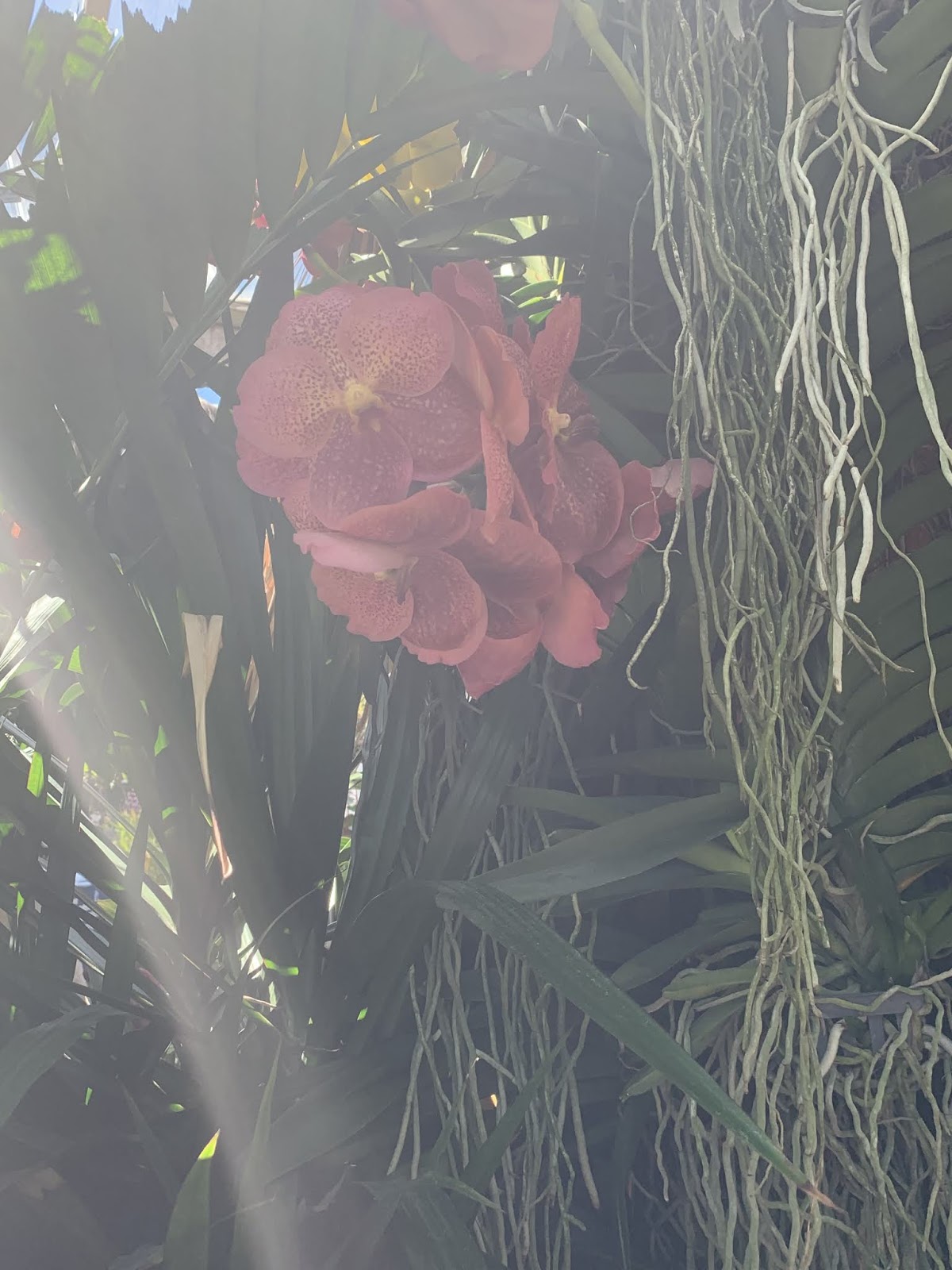
The Orchid Show at the Chicago Botanic Garden, this year titled "Brilliance", was absolutely amazing. While one of the staff told us right before we entered that this year's show was more "chic" and "sleek" than those held before, which, with all due respect, it was, my take would have been that the show enhanced the technological side of things, with lights, structures, and design in order to illuminate an idea of the orchid apart from something merely ecological and natural. Albeit the consideration of all wild things as, at times, harsh and vicious, this exhibit went a step further by approaching the unnatural side of the systems regarding this mysterious flower, organic all the same.
I say unnatural because many of the orchids presented at the show were *bred* by scientific experts. While many, including myself, might think of the caricature of a mad scientist concocting some awful invention out of sheer delight in competition's spoils - i.e. the greed of dominance and power - what I gathered from my experience at this show was not of that sense at all. Instead, I really felt a sensibility rooted in playfulness, creativity, and a survivalism not worth the name if not in the name of art itself.

Unlike the years prior, Dan and I went on February 14th, Valentine's Day, for a special viewing of show called Orchids After Dark. We arrived about a half hour before dusk, so we were able to see the orchids within various moments in-between the time the sun set and nightfall. In the entry hall, glass slides of various colours hung from the ceiling, letting in prisms of light from the sun as well as from electricity.

The opening hallway was gorgeous as usual, this time filled with triangular luminescent lights every few steps, going from ceiling to floor, shelves holding more orchids able to be seen through the transparent facade. Look:

There was definitely a vibe. As we entered the first greenhouse, the sun was still brightly lighting up everything from the hot ceilings above, its warmth reaching down to all the plants and our skin. There were neon lights of different colours in their slim glass tubes, each backlighting the form of the numerous orchid blossoms, each stem using the long electric vials as support. Natural or not, the interplay between these two forms, the world of the biological along with the manmade object, was a really fascinating combination to gaze at. Of course, the blue lights along with the purple orchids caught my eye immediately, those being two of my favorite colours.


It was unusually striking to see these displays; typically when I think of places with backlights and neon signs like these I think of sticky, greasy, smelly, grime-y places where people grind up on each other while downing rum and tequila (places I used to love... and maybe still do). But this was a dry, clean place. So I discovered it was possible to backlight and use fluorescent neon without making a place look cheap and tacky. And it held the exact same kind of energy, but more finely tuned, more focused, and more intentional, less unconsciously swerving. I mean, no one was dancing. I had forgotten how cool hot pink could be; it was really inspiring to see it used in a space that didn't remind me of Saved By The Bell.

OK. Admittedly, maybe this was just a little like my dream Barbie doll house.


One of the finest evolutionary accomplishments of orchids is that they are rich in genetic diversity. What this means for this flower is good health and more chances of survival even in times of environmental stress. Orchids are flowering plants that can withstand.

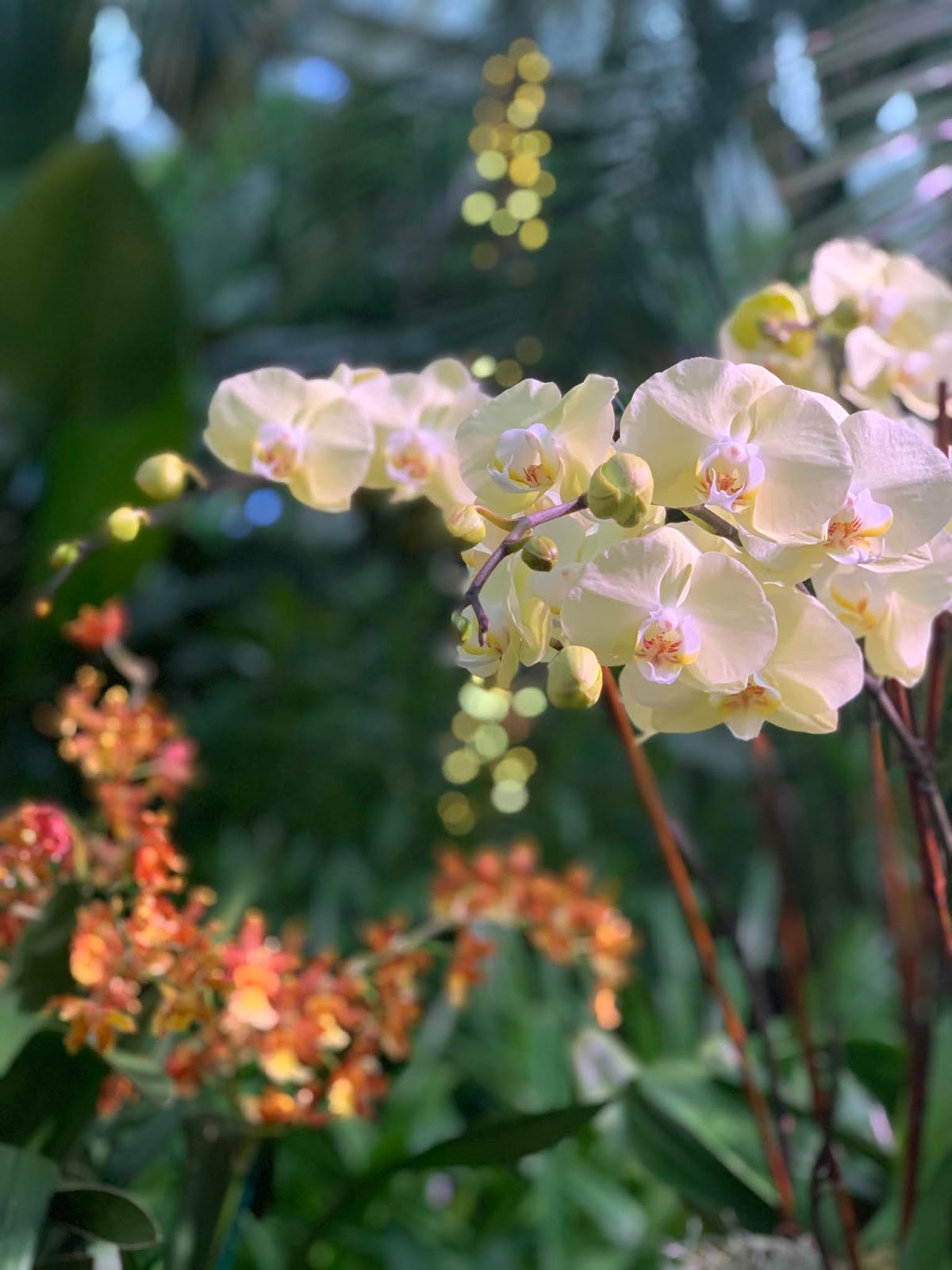


The sun started to get lower and lower as we entered the other greenhouse rooms. One of them held a green river made of tiny, tiny rocks and pebbles. The whole river was enchanting, though I don't know what exactly was lighting it up. For a while, for some vague time period, I was somewhat wary of the color green, for unknown reasons. Not evergreen, like dark greens, the colours of fir trees. But lighter greens. I have, of late, been warming to it, feeling safe in it again, and this display was helping me.
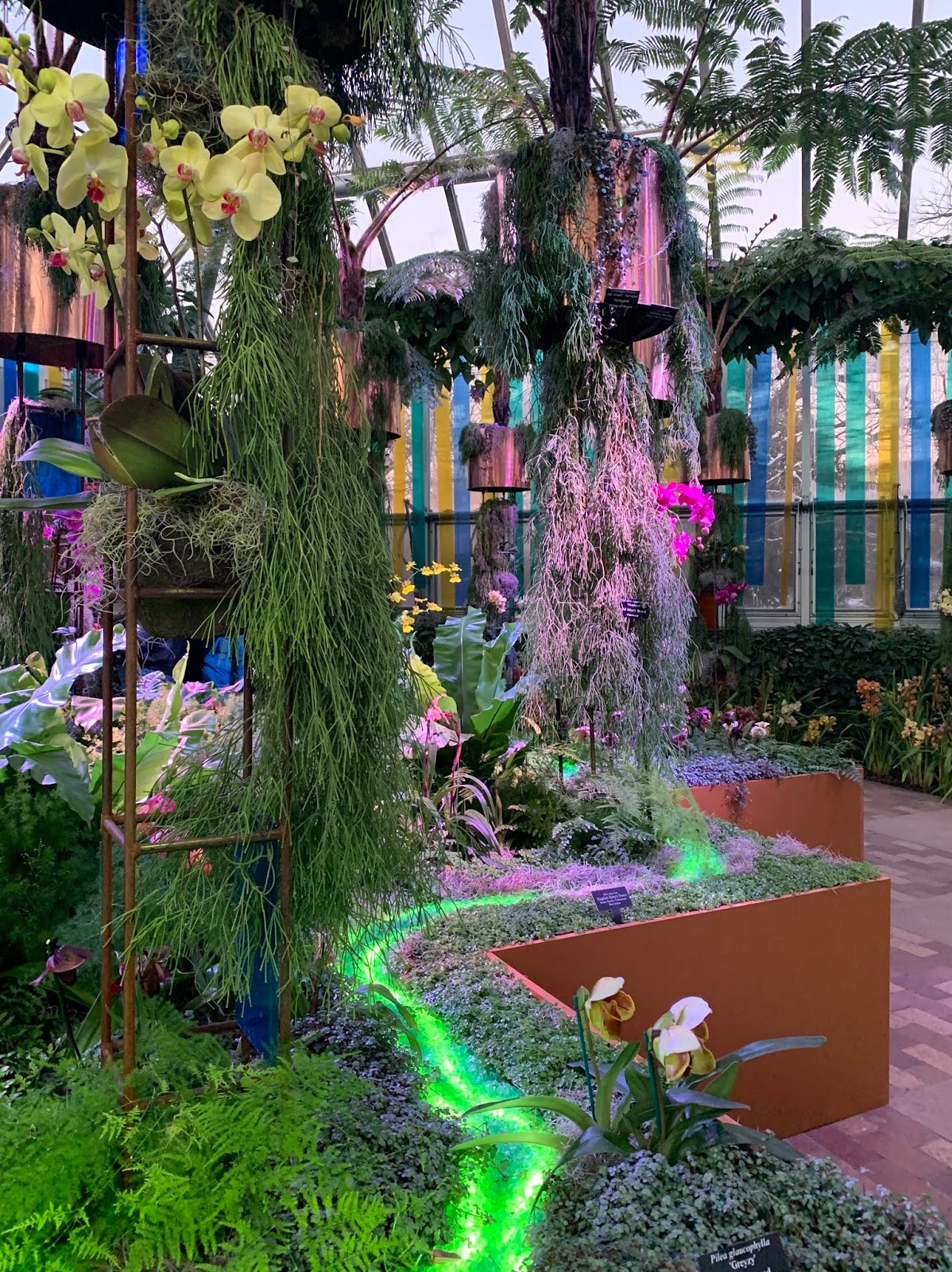


As the dusk grew darker and turned to night, the orchid colours really began to pop and show, at turns deeper and brighter hues. They were mesmerizing as they seemed to look and see their audience too, displayed fully, hanging soft organisms unfurled, eyeless, sensing.

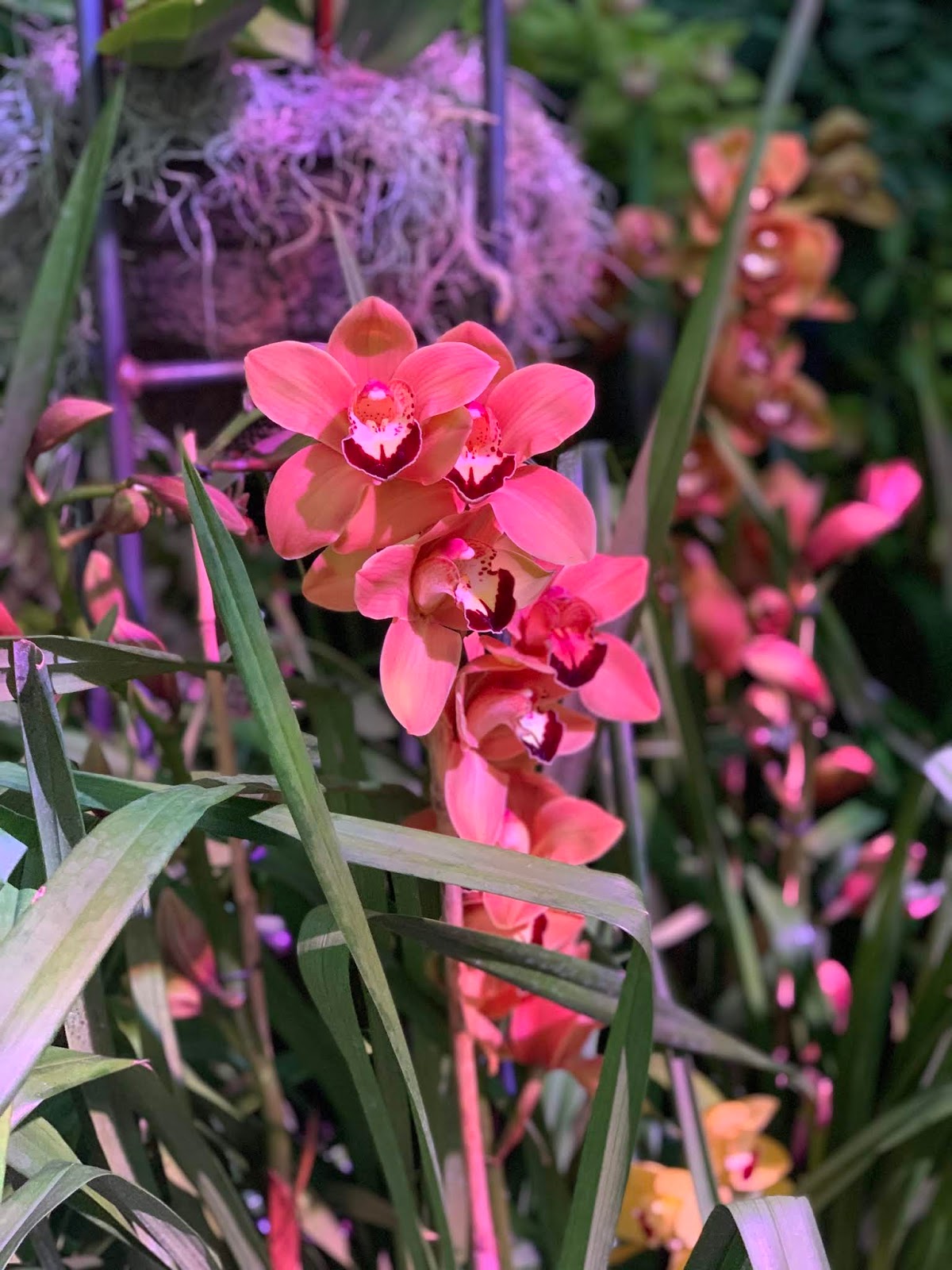


As you have probably been able to tell, there were plenty of other kinds of plant life besides orchids there, too. Many were desert plants, some others I'm not sure of. Despite their small size/s, the plants made me, too, feel really, really small... not in a humble way, nor in a belittled way. But small-like. They made me feel similar to them, and I felt the power of the fae about. Of course, this could've been my imagination running 'round, going away with itself as it does. In any case, I felt a surge of protective energy that warmed me inside as much as I was warmed by the greenhouse atmosphere. I felt lit up.


There really wasn't a scent, per se, I think all the scents were mixed together, and when I tried to smell a particular flower I couldn't really catch anything what with all the people too. But nevertheless, I breathed differently here, like I do when I visit most gardens and when I walk within the forested areas. I breathe more clearly and deeply, relieved with each healing intake of air.
It became full-on night and all the glass was penetrated by the dark outside without any light save for the florescent bulbs. We made our rounds through the greenhouses once again.


As we said goodnight to these magical, potent survivors of harsh circumstance, these purveyors of beauty and subliminal artistic expression, we exited, smiled, and looked at one another truly.
"You gonna eat that?" Dan asked, pointing to orchid head at the bottom of my glass.
"Yeah. I think I will," I replied. I slowly dipped my fingers into the glass, gently picked up the orchid, and placed the orchid on my tongue like a communion wafer. I chewed, chewed, and swallowed, finally laughing.
Dan did the same.
- F